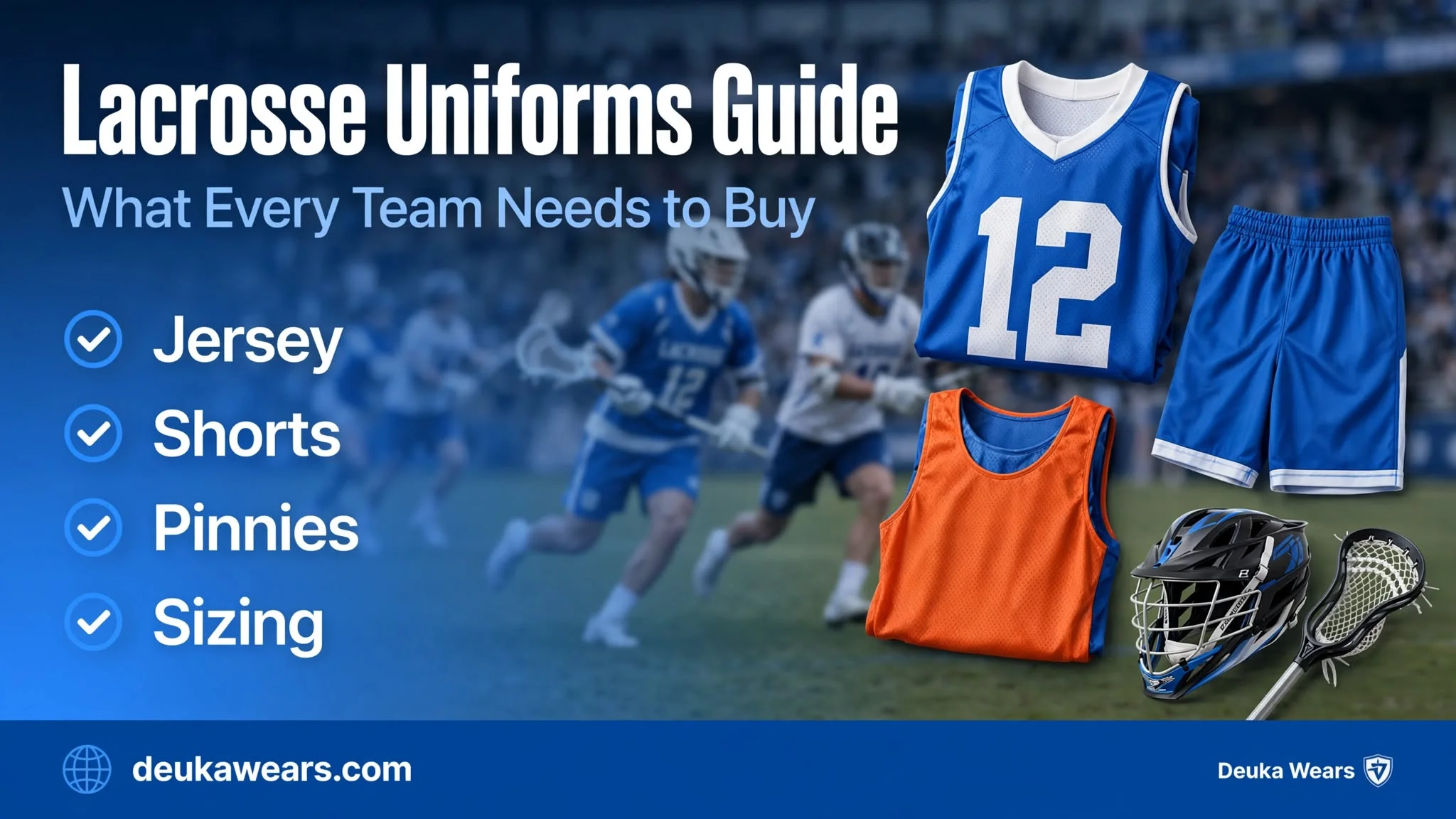
Buying lacrosse uniforms is about more than choosing a jersey and adding a team logo.
A complete uniform program needs to account for game jerseys, bottoms, practice gear, player numbers, sizing, fabric, customization, roster changes, and the way the uniforms will actually be used throughout the season.
For some teams, the core purchase may be a jersey and matching bottom. Others may need reversible pinnies, practice sets, goalie-specific options, multiple colorways, warm-up apparel, or replacement pieces.
That makes lacrosse uniforms a product-planning decision as much as a design decision.
The right approach is to determine what the team needs first, define the specifications, confirm sizing and artwork, review samples, and only then move into bulk production.
This guide explains what teams should consider when buying custom lacrosse uniforms and lacrosse apparel, from the first product decision through final ordering.
1. What Does a Complete Lacrosse Uniform Include?
A lacrosse uniform can mean different things depending on the team, competition level, format, and program requirements.
The most basic game package usually centers on a jersey and a matching bottom. However, a broader teamwear program can include several additional pieces.
A typical lacrosse apparel plan may include:
- Game jersey
- Game shorts
- Skort or other team-approved bottom
- Practice jersey
- Reversible pinnie
- Shooter or training top
- Goalie-specific jersey where required
- Warm-up apparel
- Team bags
- Coach apparel
- Additional replacement jerseys
Not every team needs every item.
The first step is therefore to separate required gamewear from optional or supporting apparel.
Game Uniforms
The game uniform is the core of the team identity.
Depending on the program, it can include:
- Custom jersey
- Matching shorts
- Skort
- Reversible jersey
- Other approved team bottoms
The jersey should provide enough space for the team’s branding, player number, and other required details while remaining appropriate for the way players move and compete.
Teams looking for a dedicated uniform can review Lacrosse Uniforms when comparing the main gamewear options available for a custom program.
Practice and Training Gear
Practice apparel has a different purpose from game uniforms.
Teams may need lightweight pinnies or practice jerseys for:
- Scrimmages
- Drills
- Camps
- Tryouts
- Training sessions
- Squad separation
A practice piece does not necessarily need the same construction or decoration as a game jersey.
For example, Pinnies & Mesh Jerseys can be useful when a program needs lightweight practice apparel that makes team separation easier.
Additional Team Apparel
Some programs also develop a wider collection that includes travel, sideline, and off-field apparel.
These pieces can help create a consistent team identity beyond competition.
The key is to build them around the same approved colors, logos, and visual system instead of treating every garment as a separate design project.
2. Start by Defining What Your Team Actually Needs
One of the easiest ways to complicate a uniform order is to start designing before deciding what the team actually needs.
Before discussing colors or patterns, create a product list.
Build a Required vs Optional List
Separate your requirements into two categories.
Required:
- Game jersey
- Game bottom
- Required personalization
- Required team or league markings
Optional:
- Practice pinnies
- Shooter shirts
- Warm-ups
- Coach apparel
- Bags
- Extra jerseys
- Fan apparel
This distinction keeps the main order focused and makes budget planning easier.
Consider the Full Season
Think beyond opening day.
Ask:
- How many games will the team play?
- How often will players practice?
- Will the team attend tournaments?
- Are home and away colors required?
- Will players need practice pinnies?
- Are replacement sizes likely to be needed?
- Will new players join during the season?
A team that only considers the first game can easily end up needing additional pieces later.
Plan for Roster Changes
Roster changes are common in organized sports.
Keep the Original Specifications
Save the final:
- Design
- Colors
- Logo files
- Number style
- Fabric specification
- Size information
- Approved artwork
Make Reorders Easier
Keeping an organized specification gives the team a clear reference when replacement uniforms or additional player sizes are needed later.


