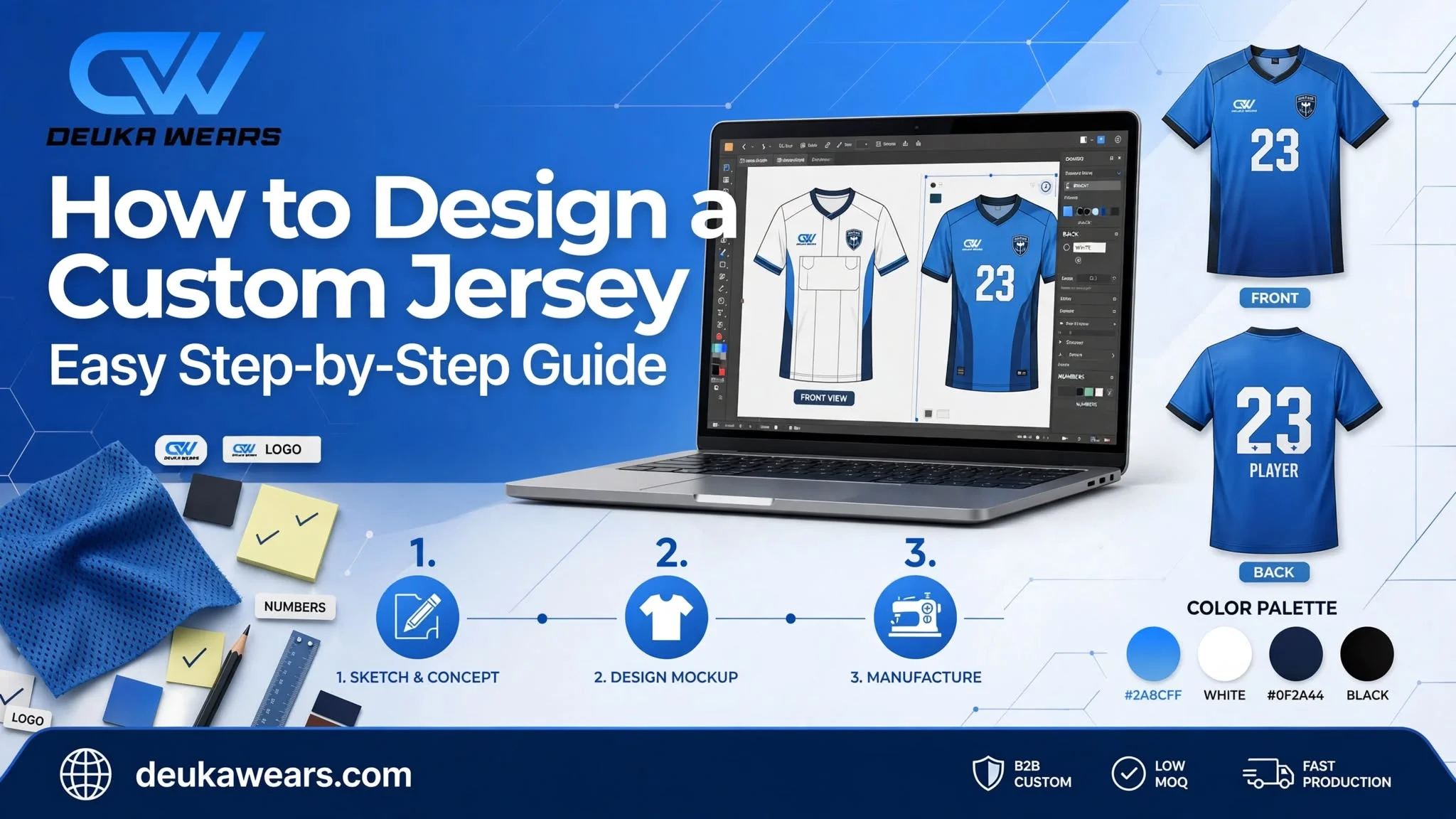
Designing a custom jersey is about more than choosing a few colors and adding a team logo. A successful jersey needs to balance team identity, visual design, comfort, sport-specific requirements, personalization, and production limitations.
Whether you are creating jerseys for a soccer club, basketball team, baseball organization, lacrosse program, school, MMA brand, or sportswear business, the design process becomes much easier when you work through it in the right order.
This guide explains how to design a custom jersey from the first idea to the final production-ready design, with practical considerations for teams and buyers in the USA, Canada, Europe, South America, Asia, Oceania, Africa, and other international markets.
1. Define the Purpose of Your Custom Jersey
Before opening a design tool, decide exactly why you are creating the jersey.
The purpose affects almost every design decision, including the fit, fabric, graphics, personalization, and printing method.
For example, a youth soccer team may need a lightweight match jersey, while a basketball program may prioritize airflow and freedom of movement. A sportswear brand creating a new collection has different requirements from a local club ordering uniforms for one season.
Start by answering:
- What sport will the jersey be used for?
- Who will wear it?
- Is it for competition, training, events, or merchandise?
- How many jerseys are required?
- Will every player need an individual name and number?
- Are sponsor logos required?
- Does the design need home and away versions?
- Will the jersey be sold commercially or used by one team?
Defining these requirements early prevents unnecessary design changes later.
2. Establish Your Team or Brand Identity
A good custom jersey should look like it belongs to the team or brand.
Before selecting patterns, establish the visual identity you want the jersey to communicate.
Consider:
- Team or brand name
- Logo or crest
- Primary colors
- Secondary colors
- Mascot
- Typography
- Symbols
- Team slogan
- Existing branding
- Cultural or regional design elements
If your organization already has brand guidelines, use them as the foundation rather than creating a completely unrelated jersey style.
For a sportswear brand, consistency is even more important. The jersey should fit within the wider visual identity used across your website, packaging, social media, and other apparel.
3. Choose a Color Palette
Color is one of the first things people notice about a jersey.
Start with one primary color and build the rest of the design around it. A simple palette is often easier to manage than using too many competing colors.
Use Contrast for Important Details
Names, numbers, logos, and other essential information must remain readable.
For example, dark lettering on a dark jersey can disappear from a distance. Similarly, a light number over a highly detailed background can become difficult to read.
When selecting colors, check:
- Front and back visibility
- Number contrast
- Logo visibility
- Sponsor visibility
- Sleeve details
- Collar and trim
- Home and away versions
Test the Palette in the Actual Jersey Layout
Do not judge colors only as isolated swatches.
A color combination that looks good on a screen may behave differently when applied across a full jersey, especially when patterns, seams, numbers, and logos are added.
Create a basic mockup early so you can see how the colors interact.
4. Choose the Right Jersey Style and Fit
The design should follow the requirements of the sport.
Different sports have different movement patterns and garment preferences. A basketball jersey may use a different cut from a soccer jersey, while a cycling jersey has very different construction requirements from baseball apparel.
Think about:
- Athletic vs relaxed fit
- Sleeve length
- Collar style
- Side panels
- Hem shape
- Arm openings
- Stretch requirements
- Breathability
- Movement
- Intended playing conditions
For teams ordering complete uniforms, the jersey should also work with the rest of the kit.
For example, a basketball design may need to coordinate with custom shorts, while a soccer jersey needs to work with the team’s shorts and socks.