Sublimated jerseys are designed for repeated sports use, but proper care still matters if you want the colors, fabric, fit, and overall appearance to stay in good condition.
The good news is that sublimated jerseys are generally straightforward to care for. Unlike many surface-applied prints, sublimation places the dye into suitable polyester fibers, so there is no traditional printed layer sitting on top of the fabric that can peel or crack.
However, that does not mean a sublimated jersey should be treated like an ordinary T-shirt.
Hot water, excessive heat, harsh chemicals, rough washing conditions, and poor storage habits can affect the polyester fabric, seams, stretch, moisture-management performance, and overall appearance.
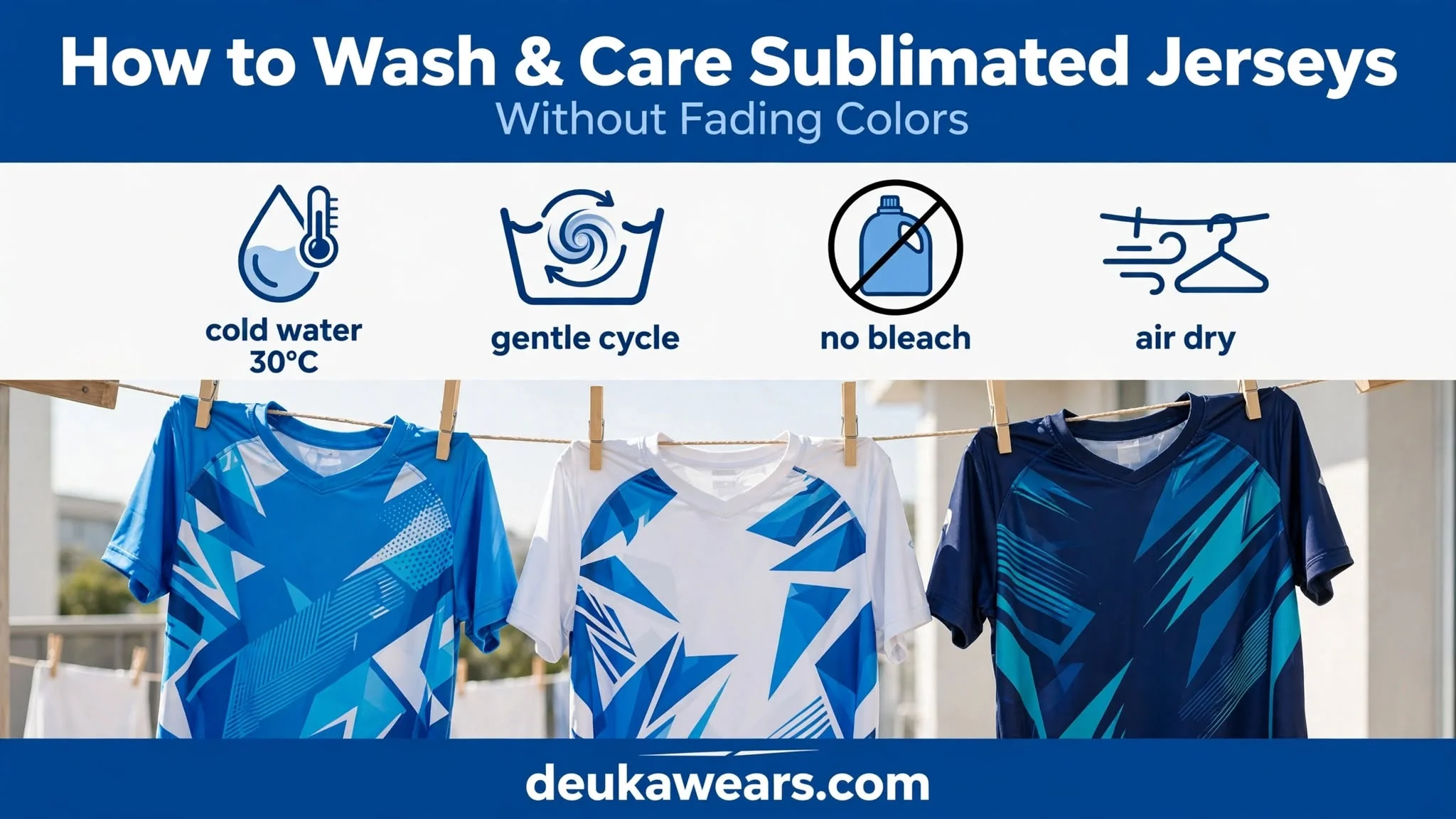
If you are wondering how to wash sublimated jerseys without fading colors, the basic routine is simple:
- Check the care label.
- Turn the jersey inside out.
- Wash in cold water.
- Use a mild detergent.
- Select a gentle cycle where appropriate.
- Avoid bleach and fabric softener.
- Air dry whenever possible.
- Keep the jersey away from excessive heat and direct harsh sunlight.
The following sections explain why each step matters and how teams, players, and sportswear buyers can build a reliable jersey-care routine.
1. Why Proper Care Matters for Sublimated Jerseys
A custom jersey has to deal with more than normal everyday clothing.
During training and competition, it may be exposed to:
- Sweat
- Dirt
- Grass
- Mud
- Dust
- Body oils
- Food and drink stains
- Repeated washing
- Friction
- Heat
- Outdoor sunlight
The sublimated design itself is relatively durable because the dye becomes part of the polyester material rather than forming a separate surface layer. This is one of the reasons sublimation is widely used for detailed sportswear designs.
But the jersey is more than its print.
The fabric, stitching, elastic areas, collar, fit, and moisture-management characteristics also need protection.
What Can Poor Washing Habits Damage?
Incorrect care can contribute to:
- Dull-looking colors
- Fabric wear
- Loss of stretch
- Reduced comfort
- Odor buildup
- Weakened seams
- Shape changes
- Damage to additional heat-applied or embroidered details
That is why jersey care should focus on protecting the entire garment, not only the sublimated artwork.
2. Can Sublimated Jerseys Be Machine Washed?
Yes, many sublimated sports jerseys can be machine washed, provided the garment’s care label allows it.
The important part is controlling the washing conditions.
A practical general routine is:
Cold water + gentle washing + mild detergent + inside out + air drying.
This approach is widely recommended across sublimated jersey care guides.
Should You Always Check the Care Label?
Yes.
Different jerseys can contain different fabric constructions, trims, elastic components, embroidery, patches, or additional decoration.
Follow the Garment-Specific Instructions First
The care label should take priority over general advice.
Check the Washing Temperature
If the label specifies a maximum washing temperature, follow that instruction rather than assuming every polyester jersey has identical requirements.
When in Doubt, Choose the Gentler Option
For a custom sublimated jersey with no unusual care requirements, cold water and a gentle washing approach are generally safer choices than high-temperature or aggressive washing.
3. How to Wash Sublimated Jerseys Without Fading Colors
If you want a simple step-by-step process, use the following routine.
Step 1 — Turn the Jersey Inside Out
Before putting the jersey into the washing machine, turn it inside out.
This reduces direct friction against the outside surface during washing and can also help protect additional graphics, logos, numbers, embroidery, or other decorative elements.
Step 2 — Use Cold Water
Cold water is the preferred option for many sublimated sports jerseys.
High temperatures can put unnecessary stress on synthetic performance fabrics and other garment components. Current jersey-care guides consistently recommend cold washing for this reason.
Step 3 — Select a Gentle Cycle
A gentle cycle can reduce unnecessary mechanical stress.
You generally do not need an aggressive wash cycle simply because a jersey was worn during a demanding match or training session.
Step 4 — Use a Mild Detergent
Use a detergent appropriate for performance clothing and follow the detergent manufacturer’s recommended amount.
Avoid assuming that more detergent means a cleaner jersey. Excess detergent can leave residue on performance fabrics.
Step 5 — Wash With Similar Items
Whenever possible, wash jerseys with similar lightweight sportswear.
Avoid washing them together with:
- Heavy towels
- Jeans
- Garments with exposed zippers
- Items with hooks
- Rough fabrics
- Heavily soiled workwear
These items can increase friction during the wash.
Step 6 — Remove the Jersey Promptly
After the cycle ends, remove the jersey instead of leaving it sitting wet inside the washing machine for an extended period.
This can help reduce unwanted odor development and unnecessary creasing.